
EDIBLE INSTALLATIONS · SENSORY ARCHITECTURE
FOOD DESIGN STUDIO
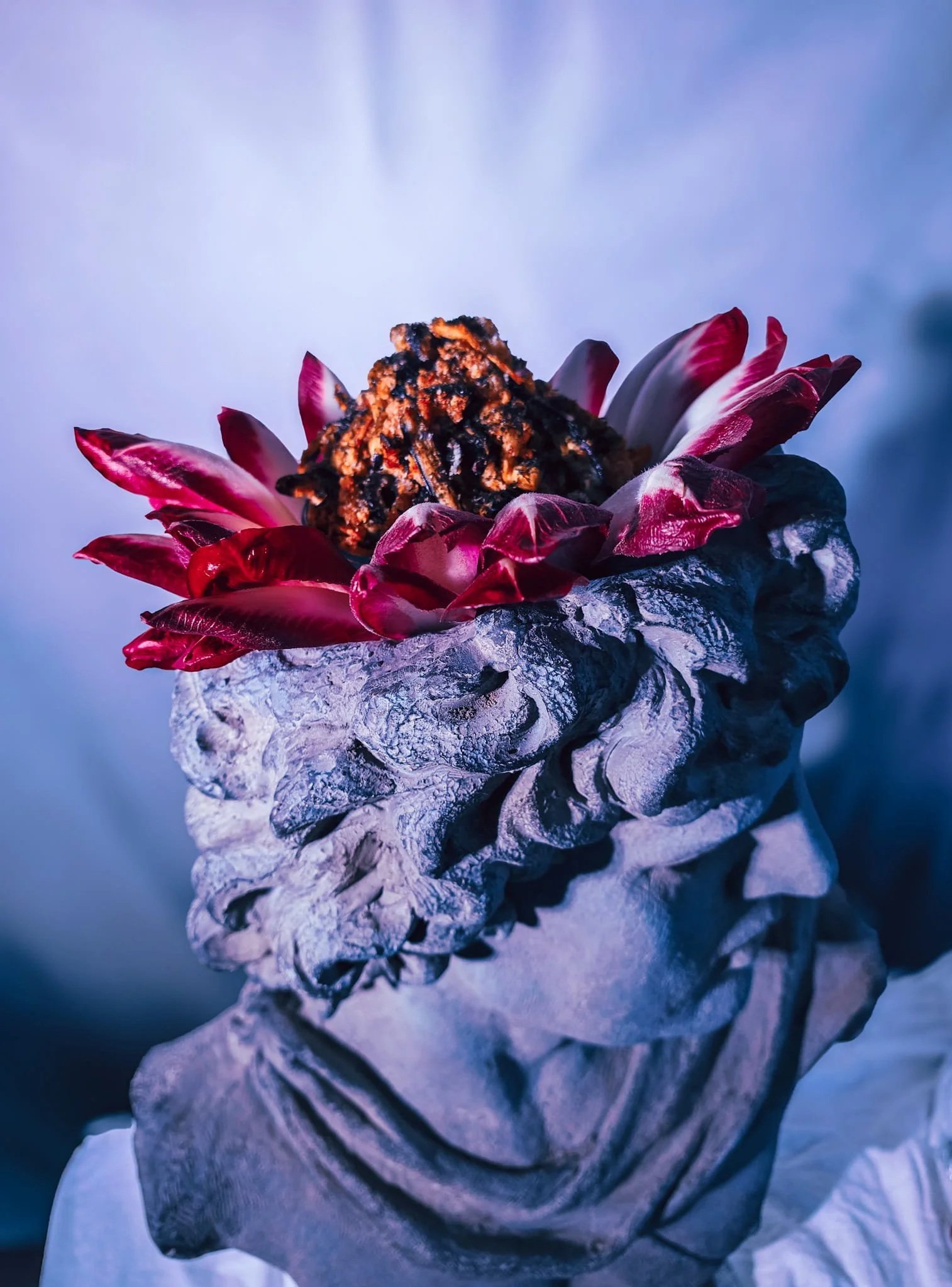
Stone holds the head. What fills it will not last the evening.
Founded in New Zealand, Veceto is the food design studio of artist Kerstin Pricken, working internationally. Contemporary art, spatial design and ephemeral gastronomy unite in her work as one discipline of its own. Her medium is the edible, in all its seasons and states. Each idea decides its own form and substance. Conceived for one site and one moment, an installation is assembled where it will be seen. Sculptural objects, edible installations and complete interiors have grown from this practice.
Site-specific installation art, as each piece stood finished.
Edible Installations, Received in Parts
Bronze sculpture is walked around, admired and left intact. Pieces meant for eating invite the opposite: to be opened, shared and carried away bit by bit. Where each will open is planned from the first sketch. Late into the night, an outline can hold while the whole is slowly given away. Everyone present leaves with a part that was theirs alone. Such living sculpture ends up belonging to everyone who was there. Distance from a wall, height above the floor and the fall of light are set before anything edible arrives. Arranged this way, the edible acts as quiet architecture, holding a room together while seeming only to wait. For a food design studio, choreography of this kind starts with one object placed well.
Spatial Design and Ephemeral Gastronomy
Three disciplines meet in every piece: one supplies the question, another the place, the third the material that answers. Everything arises where the three overlap. Alone, each offers a fragment: an image, an ornament, a pleasure. Joined, they yield an object read like a statue, entered like a room and tasted to its last trace. Honesty runs in every direction: the thought has to survive being eaten, and appetite has to survive the thought.
Most works join what stays with what goes. Concrete, plaster, timber and threads of wool remain. Anything edible is gone by midnight. Light attends both, projected across a wall, sealed inside a vessel, or narrowed to one flame. Setting them side by side marks this food design studio more than any one technique. Lasting things lend weight and memory to what is fleeting; the edible lends permanence a pulse. Which is which reveals itself slowly. That uncertainty is intended and left in place.
Vocabulary Drawn Anew: Material Transformation
Concepts receive their own vocabulary. Masonry, a shoreline, a crown of leaves, a slab of veined marble: the edible has taken each of these shapes. Seasoning follows the idea; proportion, palette and texture are drawn for that one concept. Impermanence widens the field, sparing a design shipping, storage and years of display. Ideas with one evening to live may range further. Couture house, wine estate, marque or architect: every occasion receives a language invented with it.
Some installations call for their own supports and containers. Vessels have been cast in concrete and lit from within; lace has been formed to be eaten. Bespoke moulds take over wherever a line must be exact; freehand shaping, wherever a finish should stay alive. Garment and fabric are often developed together, much as food and fashion learn from each other. Objects of this kind belong to one setting and answer to its premise.
Archive of edible art creations, listed in the order they were made.
Lacquer on a cabinet is laid down to protect. Glaze on these compositions is laid down to be broken, and finished with equal care. Care spent on a surface is passed on with it. Contours address distance; detail is kept for a closer look. Colour is placed with intent; one saturated accent can carry an interior. Restraint is a decision about attention rather than style.
Form may mislead the eye for as long as it likes. Sugar can pass for glass, a jelly for water at rest. Flavour obeys a stricter law. When a bite reaches the tongue, it is right or wrong, whatever the lighting. Any deception staged for sight resolves into a truth for the tongue. Outlines may borrow any identity; ingredients beneath are true to their origin. Surprise passes quickly; the palate takes over from there.
On Radical Elegance
Commissioned Artwork, Older Than Any Museum
Long before museums, shared bread and fruit marked every threshold of a life: births, harvests, departures, alliances of families. Feasts at the end of a season and bread broken to seal an agreement come from the same tradition. Offering something to eat remains the oldest way of saying that a moment matters. Veceto, a food design studio, stands inside that lineage and gives it contemporary shape. Pedestals, vitrines and lit plinths borrow their authority from galleries. Whatever rests on them belongs to an older ceremony. Holding both at once is the particular tension of a commissioned artwork.
Completion is a brief state. Only for a few minutes is every edge exactly as intended, every angle settled, the lamps at their chosen height. Then the first hand arrives, and the work enters its second state: a sequence of disappearances, each one composed. Whether immersive across an entire interior or held to one plinth, the arrangement changes with every person who approaches. Fragrance rises, voices gather, and the encounter turns multisensory well before a single morsel is lifted. Taste keeps its own archive. Years later, a flavour can return unannounced, carrying a whole evening back with it.
Multisensory by Degree
Sight reads colour, which shifts with temperature: a glaze deepens as it warms, a cream turns translucent. Scent comes twice, before eating and again from within, taken from ingredients or from trees around the site. Touch registers texture, coolness and weight. Hearing catches the snap of a thin shell. Last comes taste, which holds the longest note. Beyond these five lies a sixth: pepper’s warmth, mint’s chill, the prickle of fine bubbles. Installations weigh them differently; some lean on one, others on several.
Kerstin Pricken, artist and artistic director, authors the studio’s installations.
Briefly Whole: Ephemeral Composition
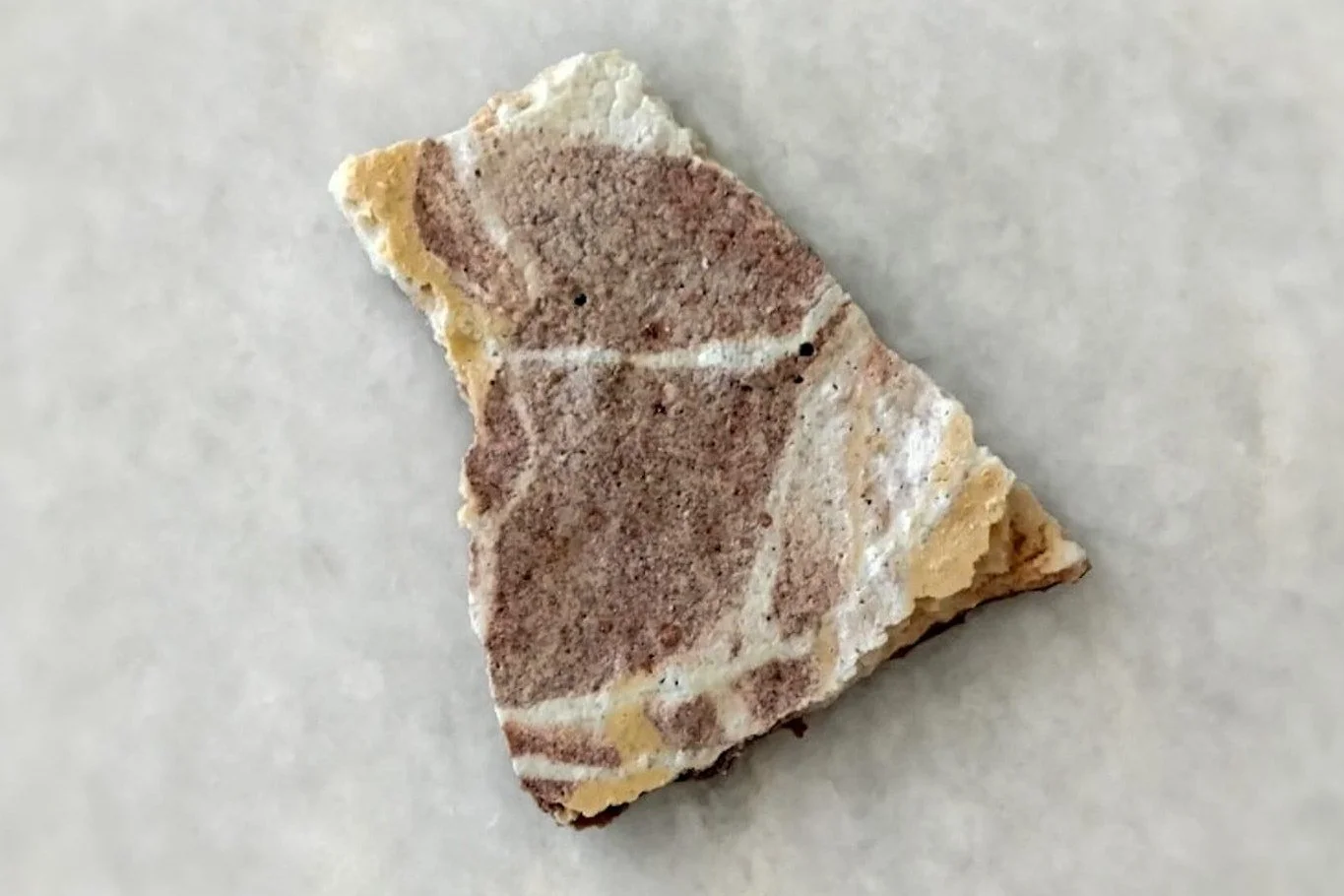
Veined by hand. Sent as an invitation.
Further Rooms of a Multidisciplinary Studio
Larger pieces appear in Selected Works, each with medium and concept. Earlier and smaller compositions are catalogued by number. Studies in material, deliberately unresolved, gather in a separate annex. Essays move between food and fashion, painting and spatial design. Behind this food design studio lies the artist’s own path through stone, silk and ceramic.